
How Many Lenses Do I Need?
A Guide to Selecting and Buying Lenses
Please Note: All images on this page and throughout the website are strictly copyright. Most are my own images but some are paid for via stock agencies and some are free images. Please respect others work : )
One thing you shouldn't do is worry about how many lenses you have. Henri Cartier-Bresson taught us that. For much of his photography career, he used only one!
Maybe you are part of a camera club, or frequently visit the photography forums? It is easy to become pressured or disheartened because you don't have a fantastic array of lenses. As I stated in the previous section, a simple walk around lens will do you for a long time if you are just starting out.
If you are looking to "kick-start" a career in photography, you may have to dig a little deeper into your coffers. Use the following as a guide to how many lenses I would recommend. Please remember this is just my opinion and is not set in stone.
Portraits, Weddings and Landscape Photography

Wide angle - Click for Larger

Mid range - Click for larger

Telephoto - Click for larger
The ultra-wide is necessary for the inside of churches during the ceremony, large groups and also for some landscape shots. Not all good landscape shots are with wide angle, however.
The mid-range wide angle lenses are great for the normal group shots and general photography at weddings. Especially using the zoom, as you can jump around the focal range as the group sizes differ. They are also good for portraits.
The standard telephoto lenses are perfect and highly recommended for portraiture and nature work. The greater clarity and sharpness is spot on for close facial shots or head and shoulders portraits. There is a noticeable difference when doing a lot of portraits with this lens, as opposed to even the better zooms. Try and have at least one standard telephoto prime lens in your bag.
A mid-range telephoto is also good for candid photography at weddings where you don't want to be "in people's faces"! Also, break free from the wide angle brigade when shooting landscapes. Use the telephoto to crop in on points of interest, the perspective can add a lot to your landscapes!
How many lenses you actually own from the above is up to you. You could at a push, get away with just 2. The 16-35mm and the 28-135mm. Are you are looking to photograph weddings? I would HIGHLY suggest that you invest in a second (or backup) camera! You do not want to be left high and dry if one packs up on you.
Architecture and Interior photography

Commercial Photography

Property Photography

Property Photography
Some would say you need a tilt/shift lens to counteract the perspective distortions when photographing buildings. If you get to know Photoshop a little, you will discover that you can make quick and simple adjustments post production. This means you don't have to fork out a lot of money on these specialised lenses.
You see, I am already saving you money. At some point in the construction of this site, I will be devoting a full section on photographing interiors for a living on a limited budget.
When photographing interiors, you will need ultra-wide angle lenses to get as much in the frame as possible. Using these lenses means you will inevitably get distortions, even with the more expensive lenses. Straight lines are, wouldn't you say, fairly important in architectural photography?
Remember that if you are using a Digital SLR with a "crop factor", you have to account for this. A 16mm lens on a normal film SLR would be almost fisheye standard. However, taking into account the crop factor, 16mm is perfect for interiors. Luckily the cropping actually takes out most of the distortion too!
Next, how many lenses for….
Sports and Nature Photography
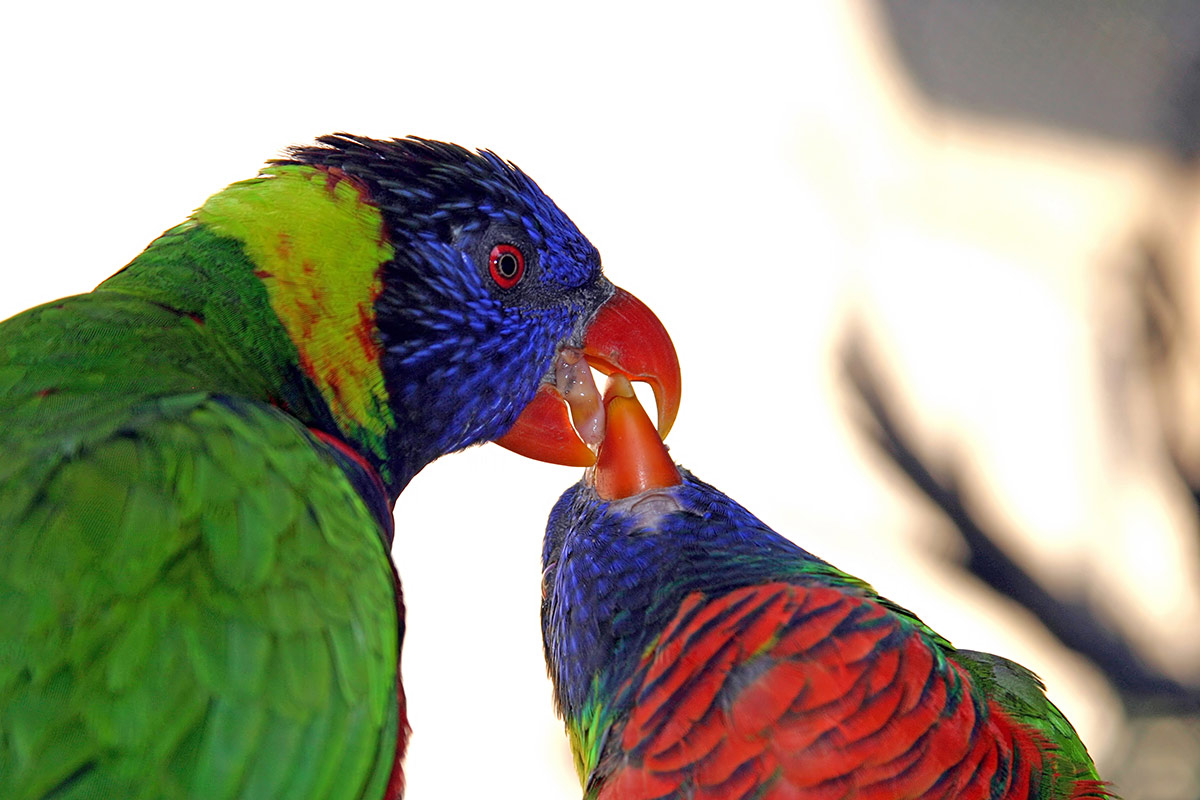
Parrots - Click for larger

Surfer - Click for larger

Motor X - Click for larger
It isn't so much "how many lenses" here, but the quality of what you do have!
If budget is an issue, this may be a difficult area to get started. As I have said before, buying a poor quality telephoto lens can be disastrous, especially if you are looking to make a living.
The telephoto will enhance even minor imperfections in the lens. Poor autofocus could mean that you lose the shot altogether. When photographing sports and nature, things happen fast and you need a lens to be able to cope with that!
Firstly, a maximum aperture of F2.8 would be a good start, as the light won't always be good. Quick, reliable autofocus will also help you to capture fast action. However, the camera plays a big part here with its frame rate, focus tracking and shutter lag.
How Many Lenses for Your Budget
Back to the budget issue. Rather than buying a couple of lenses, invest in a good quality converter. A 2x converter will turn a 70-200mm into a 140-400mm lens. An excellent coverage for a lot of subjects in this section.
Do remember though, that a 1.4x will lose you 1 stop and a 2x converter will lose you 2 stops of light. Whether it is with your aperture or shutter speed. Therefore, if your telephoto has a maximum aperture of just F8, you would never be able to use a 2x converter as your maximum aperture becomes around f.16. Most autofocus systems will not operate above F5.6 or F8 (they need the light)!
For the budget conscious I would (highly) recommend the Sigma 50-500mm. For the slightly more affluent, I would recommend the Canon 100-400mm L IS USM with converter. Or the Nikon AF-VR 80-400mm with converter.
Hopefully this section would have answered the question of how many lenses you need. Remember though, if you can, always go for quality rather than quantity. It isn't how many lenses you have, but what you do with them!