
This is a Non-Sponsored Post
How To Properly Photograph An Accident Scene For Insurance And Legal Claims
Most collision claims fall apart long before a settlement offer materializes, destroyed by a lack of visual context. People routinely take dozens of photos showing smashed bumpers or shattered glass, entirely missing the skid marks and debris patterns that actually determine liability.
Close-up images of bent metal prove damage occurred, but they fail to prove how the collision happened. Insurers regularly dispute fault when the visual record lacks wide-angle orientation. Capturing the scene correctly requires treating the smartphone camera like an evidence-gathering tool rather than a quick way to document personal property loss.
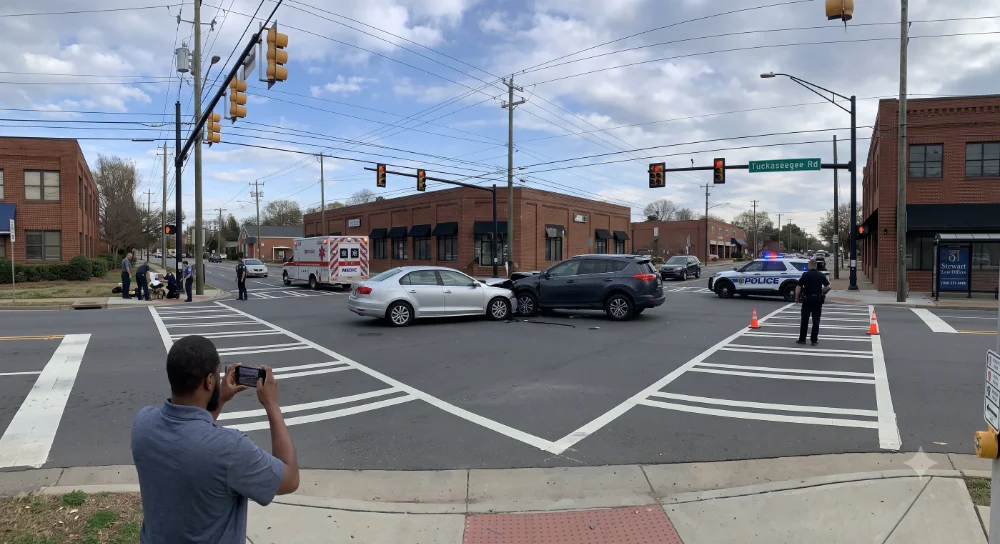
This wide-angle photograph illustrates the crucial "visual context". It captures the entire multi-lane intersection following a collision between a silver sedan and a dark SUV. Both vehicles remain positioned exactly as they stopped. Crucially, the image establishes the orientation of all vehicles relative to the lanes, traffic lights, and crosswalks, rather than focusing on close-up damage.
Why Wide-Angle Context Defeats Comparative Negligence Defenses
Insurers routinely weaponize comparative negligence laws to reduce payouts. They look for any ambiguity in the visual record to assign partial blame to the victim. Wide photographs capturing the entire intersection or roadway establish the physical orientation of all vehicles involved. Narrow shots focusing solely on a dented fender completely omit the lanes and traffic signals necessary to reconstruct the event.
Establishing context matters more than shattered plastic. Showing where vehicles ended up relative to the center line often dictates liability determinations. The Federal Highway Administration states that over 42,500 total traffic fatalities occurred in 2022, involving 12,036 at an Intersection. Proving exactly who had the right-of-way requires wide-angle environmental shots that include stop lines and crosswalks. Context matters more than shattered plastic.
Capturing The Impermanent Evidence Before It Disappears
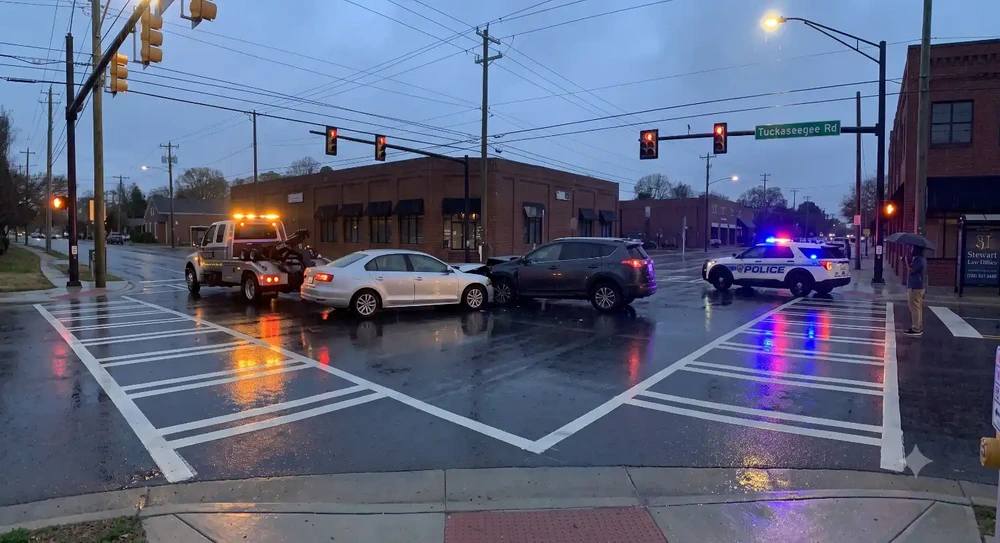
Most collision claims fall apart long before a settlement offer materializes, destroyed by a lack of visual context. People routinely take dozens of photos showing smashed bumpers or shattered glass, entirely missing the skid marks and debris patterns that actually determine liability. Close-up images of bent metal prove damage occurred, but they fail to prove how the collision happened. Insurers regularly dispute fault when the visual record lacks wide-angle orientation. Capturing the scene correctly, and before the scene changes due to weather etc, requires treating the smartphone camera like an evidence-gathering tool rather than a quick way to document personal property loss.
First responders prioritize clearing traffic over preserving evidence. Fluids evaporate rapidly. Debris disappears quickly under the tires of passing traffic.
Documenting these temporary elements immediately preserves the physics of the impact before the environment alters the facts. Time erases facts quickly here.
Skid Marks And Yaw Marks
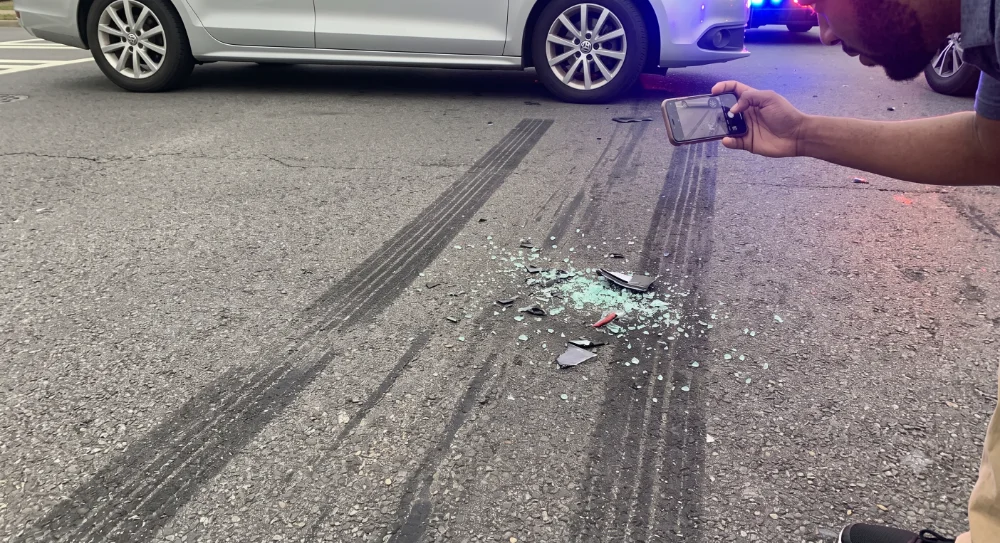
This closer perspective moves close to ground level. The focus is on critical, temporary physical evidence: dark, parallel skid marks and yaw marks leading towards a scattered field of shattered glass and plastic debris.
Photographs of these rubber markings provide accident reconstruction professionals with the exact trajectory a vehicle followed before impact. Tire friction patterns indicate braking distance and vehicle speed before the collision.
Debris Fields And Fluid Spills
Shattered glass and sudden coolant leaks mark the precise point of impact on the asphalt. Capturing the scatter pattern of this debris anchors the collision to a specific lane, effectively disproving false narratives about sudden lane changes.
The Specific Angles Adjusters Look For In Every Claim
Adjusters follow strict internal protocols when evaluating property damage and bodily injury claims. They require comprehensive exterior views to validate the internal forces exerted on the occupants. Taking photos from all four corners of the vehicle satisfies this requirement while exposing pre-existing damage that might complicate the filing.
Standard protocols demand specific perspectives:
"Adjusters don't just look at the cars; they immediately check the background of scene photos for speed limit signs or weather conditions that contradict the driver's written statement," comments Brent Stewart, a practicing Charlotte car accident lawyer at Stewart Law Offices, a personal injury law practice. “Capturing the surrounding environment limits the insurance company's ability to invent alternative theories of causation.”
Solid visual evidence often forces settlements long before a courtroom appearance becomes necessary.
Common Mistakes That Render Photographs Inadmissible
Digital zoom degrades image resolution and destroys edge clarity. When zooming in on a license plate from fifty feet away, the resulting pixelation renders the characters unreadable. Moving physically closer to the subject maintains the optical integrity required for formal legal scrutiny.
Applying social media filters or using portrait modes that blur the background immediately compromises the evidentiary weight of the image. Under Rule 901, satisfying the authentication test requires visual exhibits to accurately depict scenes. While Cornell Law School notes technical enhancements are permissible to clarify evidence, alterations that distort reality render photographs inadmissible. Altered photos lose all value.
Volume metrics highlight the necessity of flawless documentation. According to the Federal Judicial Caseload Statistics 2022 report (which tracks the 12 months ending March 31, 2022), federal district courts recorded exactly 309,102 civil case filings. Standing out in a congested legal system requires unimpeachable visual proof.
In the days following a collision in Charlotte, NC, you can coordinate directly with the attorneys at Stewart Law Offices to protect your rights. Their legal team can travel to visit you at home or the hospital if you cannot make it to their office. Contact them today at (704) 521-5000 or visit 2427 Tuckaseegee Rd, Charlotte, NC 28208.
Documenting The Environmental And Atmospheric Variables
Atmospheric conditions drastically influence stopping distances and visibility. Documenting a rain-slicked road or heavy fog provides context for why a collision occurred. Failing to capture the environment allows opposing counsel to argue that a driver acted recklessly under optimal conditions.
Weather dictates vehicle stopping distances. Glare from a setting sun or a broken streetlamp can obscure a stop sign. Photographs showing these exact lighting realities at the moment of the crash validate statements regarding visibility limitations.
Deaths from crashes in 2023 resulted in over $457 billion in total costs, including medical costs and cost estimates for lives lost. When such massive financial liabilities exist, insurers scrutinize every environmental detail to shift the financial burden.
Protecting Digital Metadata To Establish Timestamps
Modern smartphones embed hidden data directly into the image files automatically. This information proves exactly when and where an image originated.
Defense attorneys frequently challenge photographic authenticity if the underlying digital footprint vanishes during file transfers. Metadata provides an undeniable alibi.
The Role Of EXIF Data
Exchangeable Image File Format logs the exact GPS coordinates and precise timestamps of every photograph. Preserving this hidden information neutralizes arguments claiming the pictures originated on a different day or at an alternate location.
Transferring Files Without Degradation
Sending images via standard SMS/MMS often compresses the files and can strip away embedded metadata. Emailing the original files or using cloud storage folders preserves the pristine digital footprint required for formal legal discovery.
According to the latest Census of Fatal Occupational Injuries (CFOI) publication issued by the BLS, roadway incidents involving motorized land vehicles remain the leading cause of work-related deaths:
Questions About Accident Scene Photography
What Happens If Moving Vehicles To The Shoulder Alters The Accident Scene Layout?
Moving vehicles for safety remains a priority under local traffic laws. Taking rapid photographs of cars in their final positions before moving them preserves physical evidence. Once relocated, photographing remaining roadway debris still establishes the impact zone. Safety always remains the priority.
Do Insurers Accept Photos Taken At Night With Heavy Smartphone Flash Glare?
Insurers accept nighttime photos, but flash glare often obscures reflective surfaces like license plates. Taking multiple shots from different angles reduces reflective washout. Capturing the scene without a flash, relying instead on ambient street lighting, yields better background clarity.
Will Taking Photos Of The Other Driver's Insurance Card Violate Their Privacy Rights?
Photographing an insurance card voluntarily provided after a collision violates no privacy laws. Motorists are legally required to exchange insurance details following an impact, and photographing the card is a reliable way to capture this information accurately. Securing a clear picture prevents transcription errors that frequently delay the claim-filing process.
This content is a sponsored post for informational purposes only and does not constitute legal advice. Readers should consult a licensed attorney for guidance specific to their situation.